🔴 What is Red Hat OpenShift?

📌 Definition
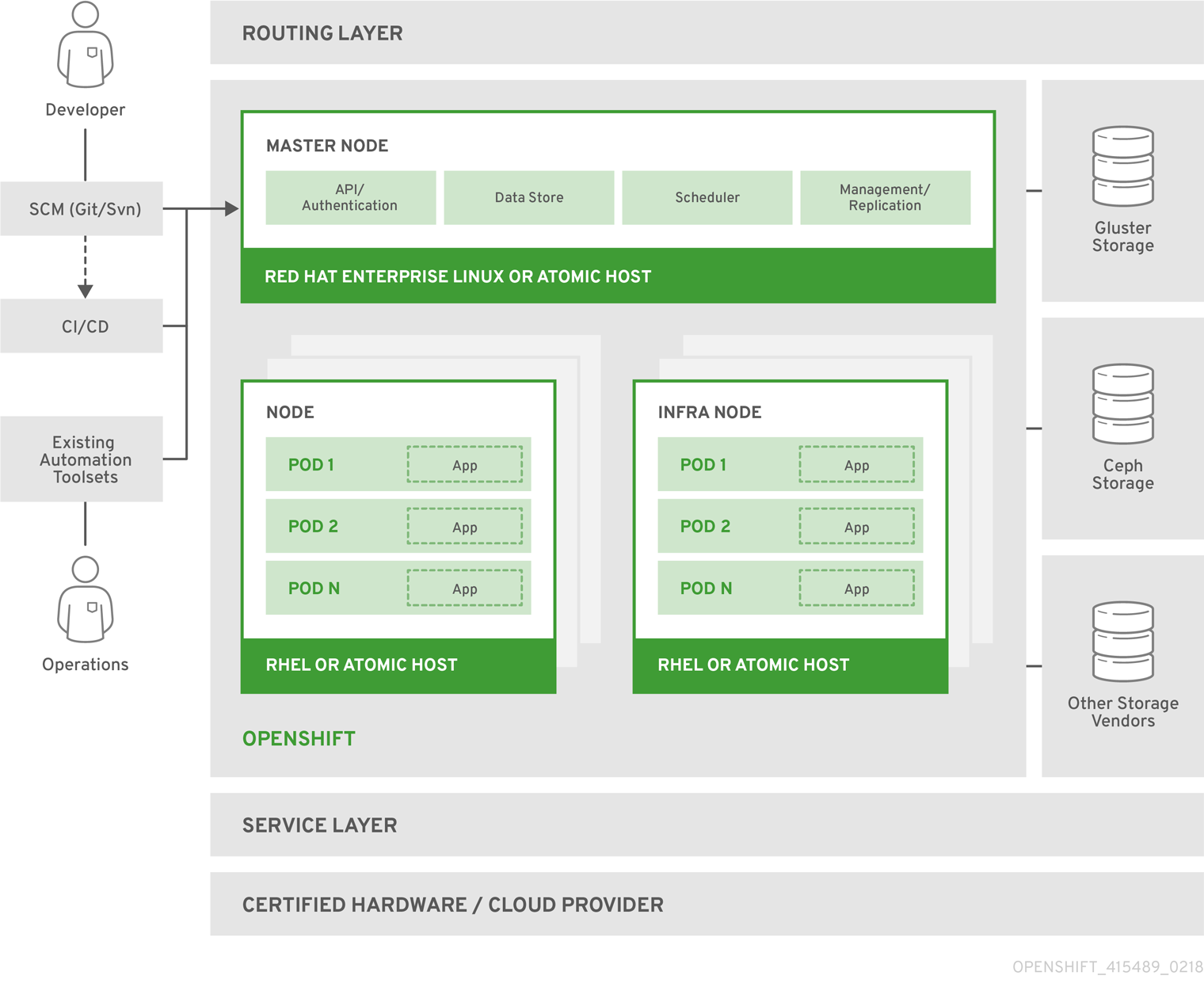
Red Hat OpenShift is an enterprise Kubernetes platform developed by Red Hat that helps organizations build, deploy, manage, and scale containerized applications across cloud, on-premises, or hybrid environments.
In simple words:
OpenShift = Kubernetes + Developer Tools + Enterprise Security + Automation
🧠 Breaking It Down
OpenShift is built on top of:
- Kubernetes → Manages containers
- Docker / CRI-O → Runs containers
- Red Hat Enterprise Linux (RHEL) → Base OS
- Built-in CI/CD, registry, routing, and security features
🏗️ What Problems Does OpenShift Solve?
Without OpenShift:
- You manually install Kubernetes
- Configure networking
- Setup ingress
- Setup security
- Setup CI/CD
- Manage upgrades
With OpenShift:
- Everything is pre-integrated
- Enterprise support included
- Security enforced by default
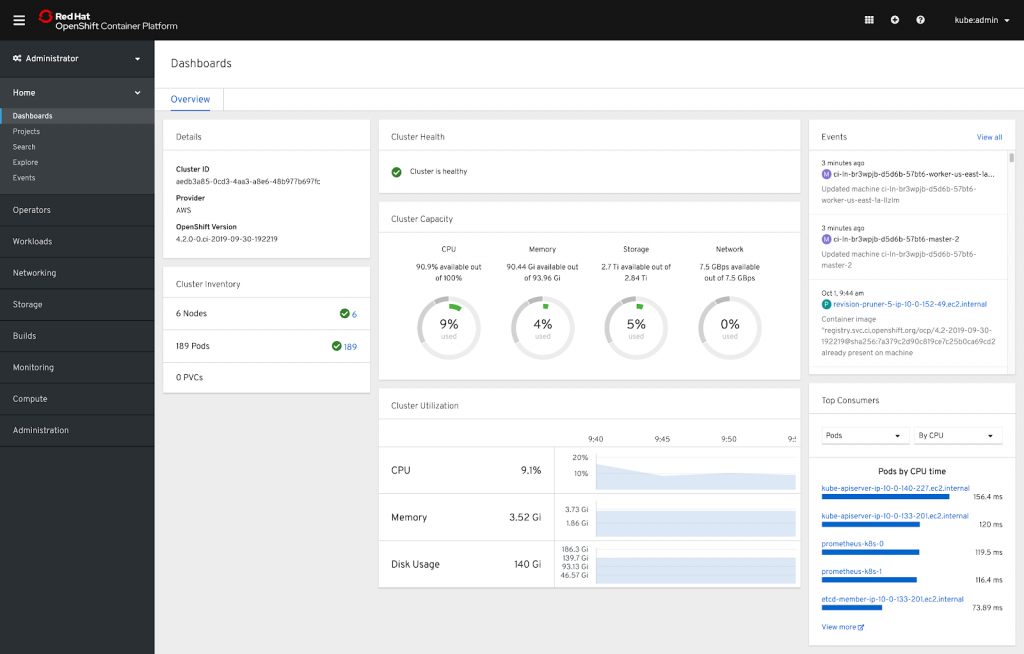
- Easy web console for developers
⚙️ Core Components
| Component | Purpose |
|---|---|
| Control Plane | Manages cluster |
| Worker Nodes | Run applications |
| Routes | Expose apps externally |
| ImageStreams | Manage container images |
| BuildConfigs | Build images from source |
| Pipelines | CI/CD automation |
🆚 OpenShift vs Kubernetes
| Kubernetes | OpenShift |
|---|---|
| Open source project | Enterprise product |
| CLI heavy | Web UI + CLI |
| Manual setup | Preconfigured |
| Flexible security | Strict security by default |
☁️ OpenShift Deployment Models
- OpenShift Local (CRC)
- OpenShift on bare metal
- OpenShift on AWS / Azure / GCP
- OpenShift Dedicated
- Red Hat OpenShift Service on AWS (ROSA)
🎯 Why Companies Use OpenShift
- Enterprise security policies
- Hybrid cloud strategy
- CI/CD built-in
- Easy scaling
- Vendor support from Red Hat
Large enterprises like banks, telecom, healthcare use it.
🔥 In One Line (Interview Ready)
Red Hat OpenShift is an enterprise Kubernetes platform that provides a secure, scalable, and automated environment for deploying and managing containerized applications across hybrid and multi-cloud environments.
Since you’re already working with:
- Docker
- AWS
- Terraform
OpenShift will feel like: 👉 Kubernetes with enterprise automation + stricter security.